
Duke Ellington
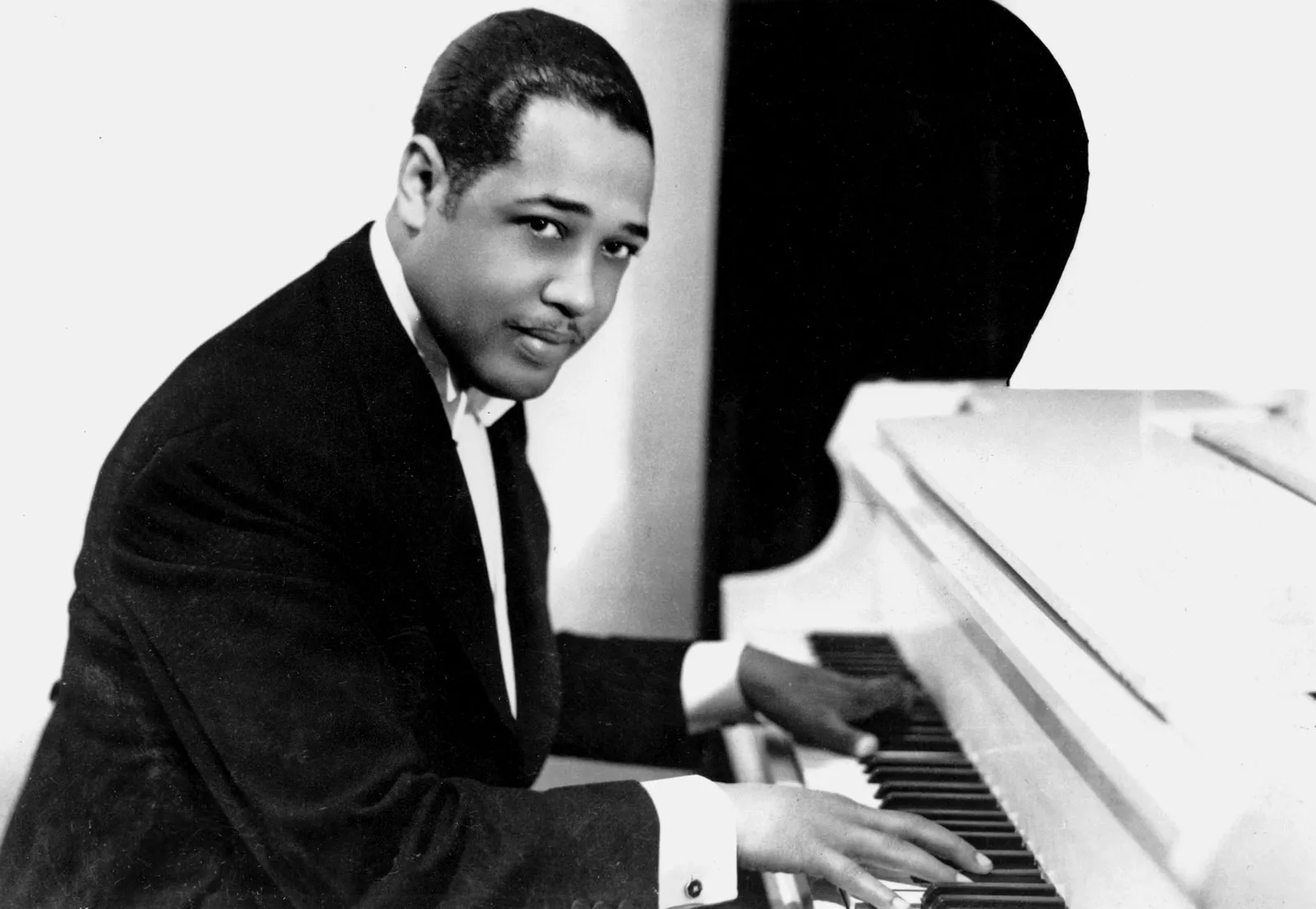
Duke Ellington was an American composer, pianist, and bandleader who stands as one of the most pivotal figures in 20th-century music. Born Edward Kennedy Ellington in 1899 in Washington, D.C., he earned his nickname “Duke” for his gentlemanly manners and polished style from a young age.
Ellington led his jazz orchestra from 1923 until his death in 1974—a span of more than 50 years. Under his direction, the group became the definitive big band ensemble, elevating jazz from popular dance music to a respected art form. Unlike many of his contemporaries, Ellington composed music specifically to highlight the unique strengths of individual band members, creating a deeply expressive and dynamic sound.
He composed over 1,000 works, including standards such as “Mood Indigo,” “It Don’t Mean a Thing (If It Ain’t Got That Swing),” “In a Sentimental Mood,” and “Take the ‘A’ Train.” His innovations in harmony, orchestration, and form helped bridge jazz with classical and experimental approaches, and his suites—like Black, Brown and Beige—brought African American history and culture to the concert hall.
Ellington was also a significant cultural figure, known for his elegance, eloquence, and commitment to Black artistic excellence. He received numerous accolades during his lifetime, including the Presidential Medal of Freedom and a posthumous Pulitzer Prize.
Duke Ellington’s influence spans jazz, classical, film scores, and popular music. His music remains vital today, studied, performed, and revered for its sophistication, originality, and timeless swing.
Filter Records
Genre
- Afrobeat (3)
- Boogie (5)
- Modern Boogie (1)
- Disco (2)
- Italo-disco (1)
- Edit Culture (1)
- Electronic (188)
- Acid (2)
- Acid Techno (1)
- Ambient (5)
- Ambient Techno (2)
- Balearic (1)
- Basic Channel related (39)
- Bass Music (2)
- Beat-Boogie (2)
- Beat‑Driven Experimental (1)
- Deep House (13)
- Detroit (15)
- Disco Dub (1)
- Disco House (1)
- Downtempo (2)
- Drexciya related (22)
- Drum & Bass (1)
- Dub (2)
- Dub House (2)
- Dub Techno (34)
- Electro (37)
- Experimental (26)
- Garage House (1)
- House (13)
- Industrial (2)
- Jazz Dance (1)
- Juan Atkins related (5)
- Left‑field (2)
- Live Electronic (3)
- LOFI House (1)
- Machine Funk (1)
- Minimal (10)
- Minimal Techno (6)
- New Wave (1)
- Plus-8 related (4)
- Progressive House (1)
- Progressive Techno (1)
- Progressive Trance (1)
- Psychedelia (2)
- Rhythm & Sound related (40)
- Soulful House (1)
- Synth Pop (2)
- Synth‑Improvised (1)
- Techno (67)
- Trance (1)
- Vaporwave-infused Beats (5)
- Experimental Rock (1)
- Funk (26)
- Bedroom Funk (2)
- Electro-Funk (2)
- G‑Funk (4)
- Modern Funk (2)
- Synth Funk (1)
- West Coast Funk (1)
- Gospel (1)
- Hip Hop (124)
- Abstract Hip Hop (5)
- Alternative Hip Hop (4)
- Beat Tape (8)
- Boom Bap (19)
- Broken beat (1)
- Chillhop (1)
- Classic Hip Hop (7)
- Conscious Hip Hop (6)
- Contemporary Hip Hop (1)
- Downtempo Beat Music (2)
- East Coast Hip Hop (9)
- Experimental Hip Hop (13)
- Funk/Soul Hip Hop (5)
- Hardcore Hip Hop (4)
- Instrumental Hip Hop (39)
- J Dilla Related (16)
- Jazz Hip Hop (20)
- Jazz-inflected Beat (3)
- Left‑field rap (0)
- Lo‑Fi Hip Hop (8)
- Madlib Related (28)
- MF Doom Related (15)
- Plunderphonics (1)
- Psychedelic Hip Hop (2)
- Ragga Hip Hop (1)
- Remix Hip Hop (2)
- Sampledelia (6)
- Trip Hop (1)
- Trip‑hop (1)
- Turntablism (2)
- Underground Beat Music (1)
- Underground Hip Hop (17)
- West Coast Hip Hop (7)
- Indie (2)
- Jazz (18)
- Acid Jazz (0)
- Bebop (2)
- Blues Piano (1)
- Contemporary Jazz (3)
- Cool Jazz (2)
- Free Jazz (1)
- Future Jazz (0)
- Hard Bop (8)
- Jazz-Funk (0)
- Jazz-Fusion (0)
- Modern Jazz (2)
- Post-Bop (4)
- Soul Jazz (5)
- Limited Edition (23)
- Lo-fi (3)
- Lo-Fi Beat (1)
- Mixed Album (3)
- Pop (15)
- Alternative Indie (1)
- Dream Pop (2)
- Indie Pop (9)
- Psychedelic Pop (5)
- Synth Pop (3)
- Pressed at Analog Dreams (4)
- Psychedelic (1)
- R&B (7)
- Contemporary R&B (2)
- Reggae (1)
- Rock (5)
- Alternative Rock (1)
- Experimental Rock (1)
- Soft Rock (3)
- Soul (32)
- Blue-Eyed Soul (1)
- Future Soul (1)
- Lo-Fi Soul (1)
- Neo-Soul (8)
- Pop Soul (1)
- Psychedelic Soul (2)
- Retro Soul (1)
- Spoken Word (2)
- World Music (1)
Artist
- 0 Records
- A Tribe Called Quest
- A. Shakir
- A.O.S
- Aaron Carl
- Air Kraft Vision
- Alden Tyrell
- Analog Dreams
- Andrea Ottomani Nontet
- Anthony Naples
- Antony Coppens
- Apifera
- Art Blakey
- Augustus Williams
- Aux 88
- B-Sides (Frank De Wulf)
- Basic Channel
- Benny Sings
- Big Hands
- Big Tone
- Blake Baxter
- Bloomy Meadows
- Blu
- BluRum13
- Boris Blenn
- Breeze Brewin
- Brian Ellis
- Bruce Haack
- Bugseed
- Caps Lock
- Carl Craig
- Chaos
- Charizma
- Charlie Byrd
- Chris Read
- Cocoo
- Colonel Red
- Connie Price & The Keystones
- Cyrus
- Dam-Funk
- Dan Curtin
- DCE
- Declaime
- Defari
- Destani Wolf
- Detroit In Effect
- Dexter Gordon
- Digital Underground
- Distance
- DJ Bone
- DJ EFN
- DJ Motora
- DJ Premier
- DJ Sotofett
- DJ Spider
- DJ Spinna
- DJ Stingray 313
- Dopplereffekt
- Drexciya
- Dudley Perkins
- Duke Ellington
- Eden Transmission
- EDO8
- EPMD
- Eric B. & Rakim
- Erin Buku
- Exquisite Corpse
- Fatlip
- Firn
- Forest Drive West
- Formant Value
- Franklin De Costa
- Gang Starr
- Gensu Dean
- Georgia Anne Muldrow
- Gerry Mulligan
- Guilty Simpson
- Guru
- Hardlife
- Harmonious Thelonious
- Huey Mnemonic
- Inkswel
- Isaiah Deshon
- J Dilla
- J. Rawls
- J.Rocc
- James Pants
- Jay Duncan
- Jerry Paper
- Jessbeatz
- Jimmy Smith
- John Carroll Kirby
- John Coltrane
- John Gray
- Jonti
- Jonwayne
- Jordan GCZ
- Juan Atkins
- K‑Def
- Kiefer
- King Gizzard & The Lizard Wizard
- King Pari
- Knxwledge
- Kool Keith
- Lake Haze
- Lee Morgan
- Lee Scratch Perry
- LKR
- Local‑Mu12
- Lord Sko
- Lucy
- LYMA
- Lyrics Born
- Mackjunt
- Mad Mike
- Madlib
- Maimouna Haugen
- Mano De Fuego
- Marco Polo
- Masta Ace
- Matchless Gift
- Max Watts
- Mayer Hawthorne
- Meade "Lux" Lewis
- Method Man
- MF Doom
- Mike Ellison
- Mike Huckaby
- Mild High Club
- Mndsgn
- Monolake
- Mood
- Moodorama
- Moodymann
- Mr. Fingers
- NAS
- Neuro State
- Nickelman
- Nicolò
- Niklas Wandt
- Non Phixion
- NxWorries
- Octagon
- Oh No
- Om Unit
- Ordo Sakhna
- Pascal Hetzel
- Peanut Butter Wolf
- Pearl & The Oysters
- Percee P
- Peven Everett
- piska power
- Plastikman
- Potatohead People
- Prince Language
- Professor Creepshow
- Psyance
- Quadrant
- Raekwon
- Reel by Real
- RS Tangent
- Sai Galaxy
- Saib
- Samiyam
- Scan 7
- Secret Circuit
- Shinji
- Showbiz & A.G.
- Sick Hardcore
- Silas Short
- Silver Apples
- Solid Gold Playaz
- Sonny Clarke
- Soreab
- Sound Synthesis
- Speedy J
- Stan Getz
- Steam Down
- Steve Spacek
- Stimulator Jones
- Street Life
- Suburban Knight
- Suncream
- Surgeon
- Talib Kweli
- Terrence Dixon
- The Advent
- The Allergies
- The Black Dog
- The Exaltics
- The Stepkids
- Thelonious Monk
- Tommy Martini
- Tony Allen
- Tony Cook
- trog’low
- Tuxedo
- Underground Resistance
- Various Artists
- Vex Ruffin
- White Mice
- Worli
- XL Middleton
- Yazmin Lacey
- Your Old Droog
- Zackey Force Funk
- Zapp
- Zein
- Zopelar
Label
- 0 Records
- Alleviated Records
- Anacalypto Records
- Apparel Music
- Atlantic
- Avec Plaisir
- Baroque Sunburst
- Basic Channel
- Beat Junkie Sound
- Berceuse Heroique
- Big Dada
- Blacksmith Music
- Blue Note
- Chicken Coop Recordings
- Chrysalis Records
- Clone Aqualung Series
- Clone Classic Cuts
- Clone Jack For Daze
- Clone West Coast Series
- Cold Busted
- Columbia
- Compost Records
- Correct Technique US
- Cosmocities
- Craft Recordings
- Cultivated Electronics
- D.I.T.C. Records
- DCE Records
- Disk
- DOL
- Dust Science Recordings
- Ebonite Records
- Electrostatic
- Elypsia
- Emotions Electric
- EPM Music
- Evasione Digitale
- ExoPlanets
- Fat Beats Records
- Field Recordings
- Guilty By Association
- Hobo Camp
- Honest Jon's Records
- Ice H20
- Impressed Recordings
- Inner Tribe Records
- Jalapeno Records
- Javotti Media
- Junkadelic Music
- Kapp Records
- Lazy Reflex Complex
- Lex Records
- Life And Death
- Limited Network
- Livity Sound
- Loyalty Digital Corp.
- M.A.P.
- Madlib Invazion
- Marco Polo Beats
- Marionette
- Matic Records
- Maurizio/M-Series
- Mello Music Group
- Metroplex
- MoFunk Records
- Mr Bongo
- Music Man Records
- Nature Sounds
- Not On A Label
- NovaMute
- Paraiso
- Pay Jay Productions
- Payday
- Peacefrog
- Post Up Music
- Power Station
- Púca Sounds
- Puzzlebox Records
- Rapster
- Redefinition Records
- Rhino
- Roots
- Rush Hour
- SIC Records
- SomeOthaShip Connect
- Sound Metaphors Records
- SPA Recordings
- Spaghetti Bender Music
- Still Music
- Stimulated Records
- Stones Throw Records
- Street Education Records
- Superjock Records
- The Funky President
- The Playground
- The Trilogy Tapes
- Tommy Boy
- Transmigration
- Tresor
- Tuff Kong Records
- UBB Enterprises
- Uncle Howie Records
- Underground Resistance
- URBNET Records
- Verve Records
- Vintage Vibes
- Waxtime In Color